
Brand Protection Intelligence

Stop paying commissions on traffic you already own.

Hidden coupon rings register disguised creator accounts to intercept branded searches right before checkout.

How a branded search gets stamped as an affiliate sale

Recreated step-by-step on a sample storefront (Alder & Pine Supply) to show the exact browser path, bridge pages, and injected payout parameters captured during an audit without exposing private client programs.

Stage 01 · t+00.0s · High-Intent Checkout Buyer

Ready-to-buy shopper pauses at checkout to search for a code

The customer already holds an item in their bag on Alder & Pine Supply and opens Google for a promo code. Disguised coupon aggregators dominate the top sponsored and organic slots seconds before payment.
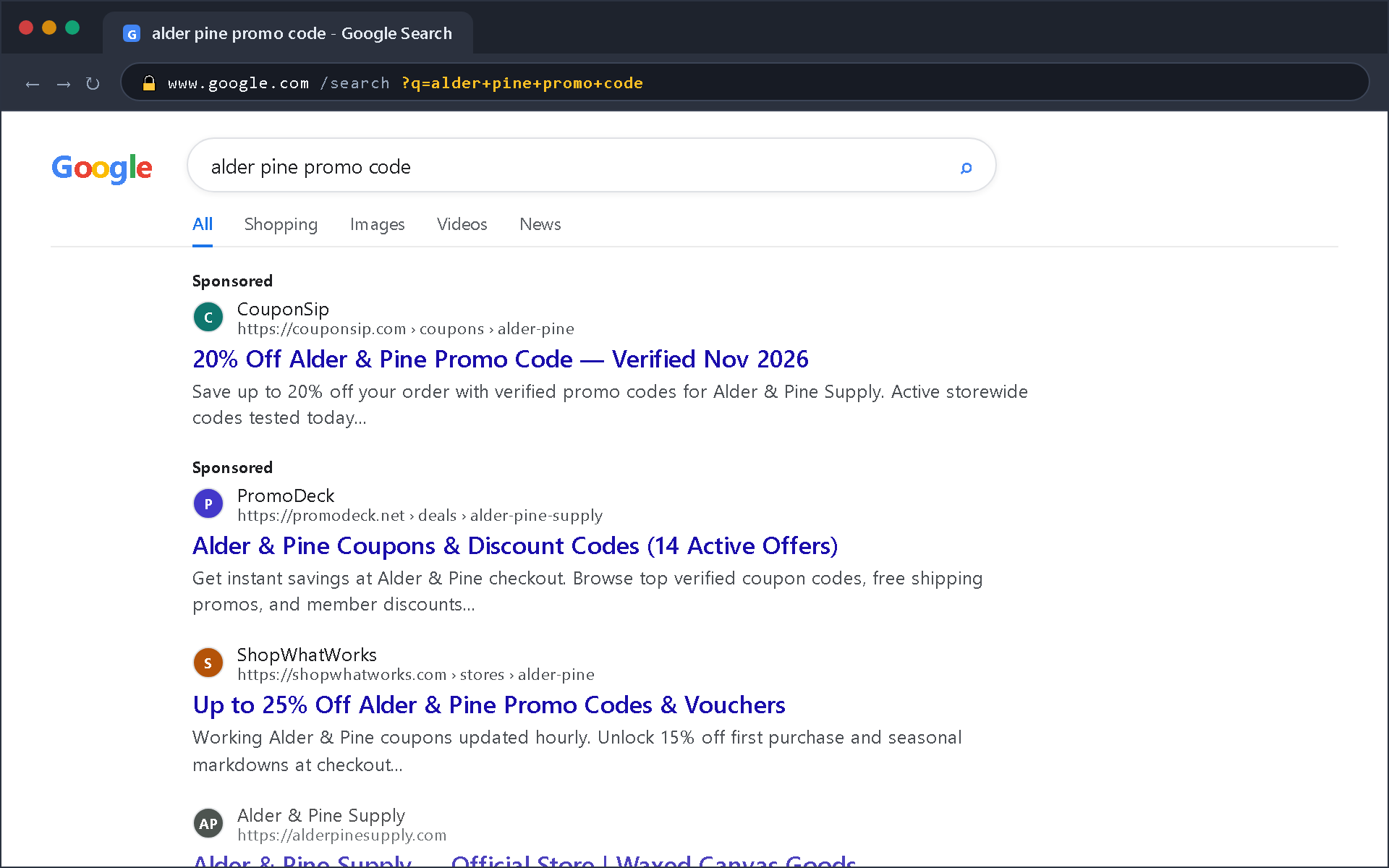
Simulated Chrome search window showing CouponSip and PromoDeck sponsored promo code results above Alder & Pine Supply.
Stage 02 · t+04.2s · Disguised Bridge Property

Throwaway coupon domain masks an approved affiliate ID

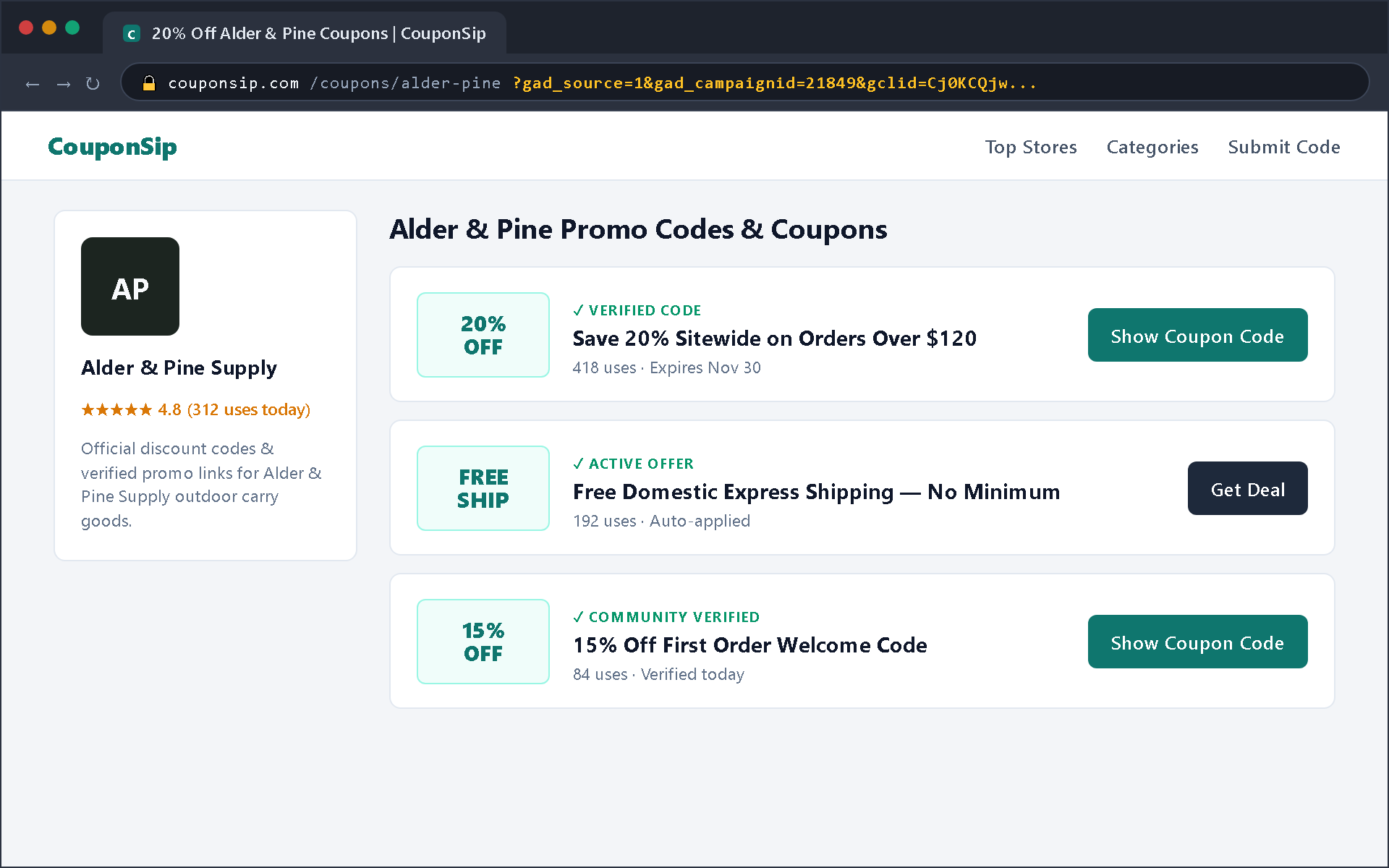
Inside your affiliate dashboard, this partner poses as an ordinary creator or deal reviewer. Externally, CouponSip runs paid search arbitrage across rotating bridge domains split across separate IDs so none trip velocity alerts.

Simulated CouponSip bridge page for Alder & Pine showing Google Ads gclid parameter and Show Coupon Code triggers.
Stage 03 · t+09.8s · Click-to-Copy Redirect

Clicking "Copy Code" silently fires the outbound affiliate hop

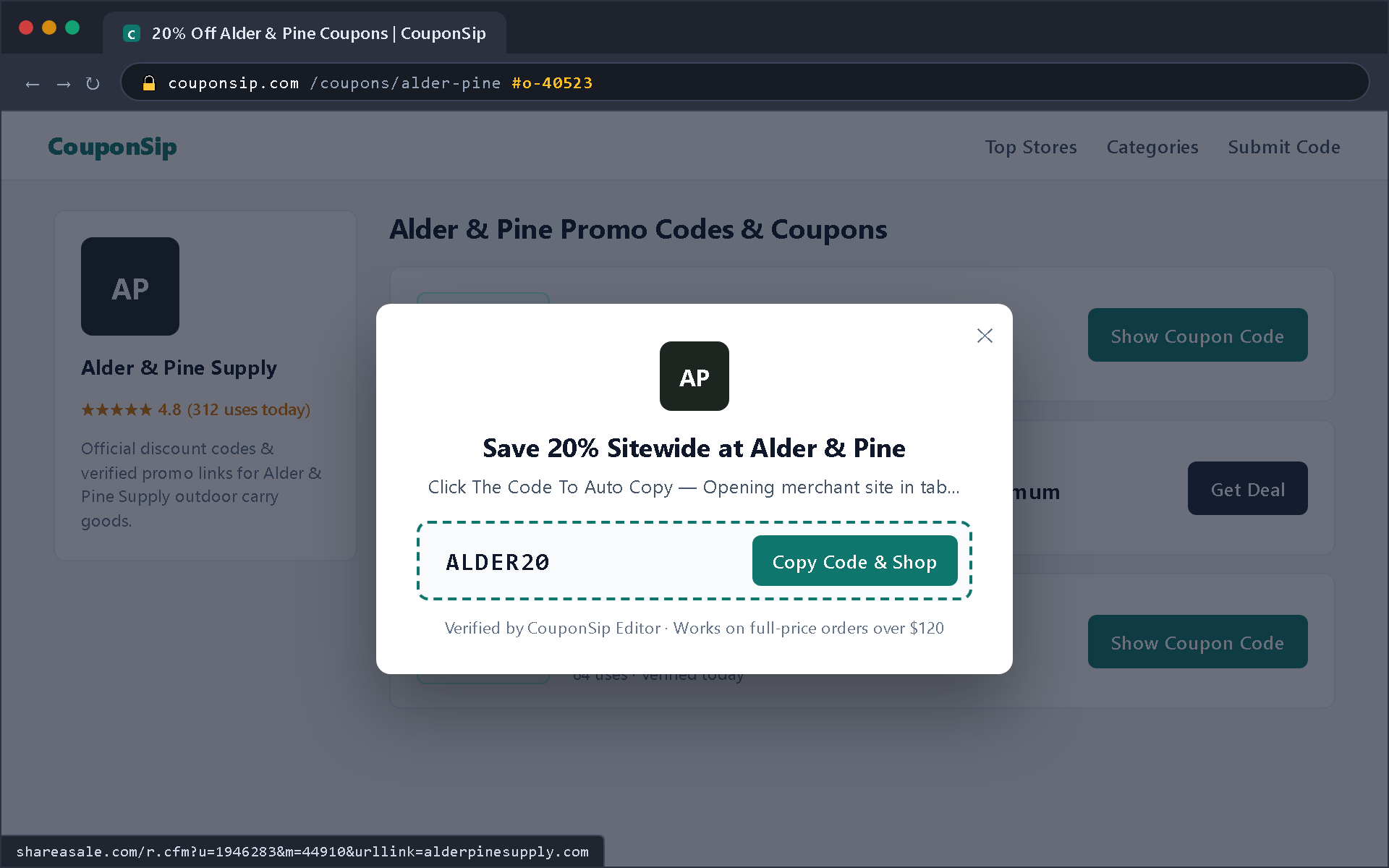
Clicking to reveal the code opens the pop-over modal and triggers the ShareASale relay link in the background (visible in the lower-left preview bar), stamping a fresh affiliate tracking cookie in the buyer's browser.

Simulated CouponSip click-to-copy modal showing code ALDER20 and the ShareASale tracking link in Chrome's bottom-left status bar.
Stage 04 · t+11.1s · Last-Click Reassignment

Your storefront returns stamped with affiliate payout parameters

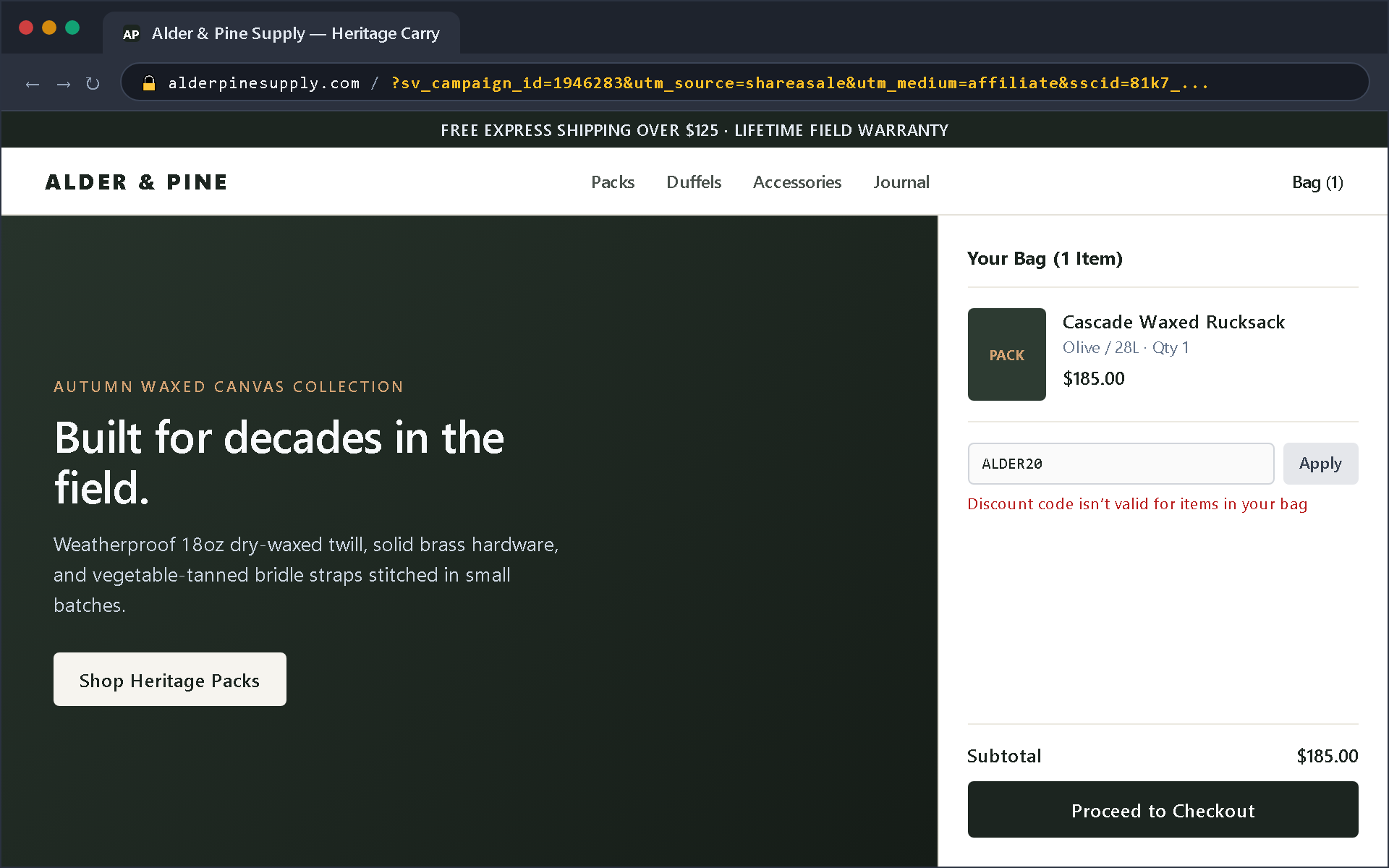
Even when the revealed coupon code is rejected at checkout, the landing URL already carries utm_source=shareasale and an active click ID. Standard last-click rules pay the commission when the shopper finishes buying.

Simulated Alder & Pine Supply storefront with bag open showing rejected ALDER20 code while ShareASale UTM tags sit active in the URL bar.

Why split coupon rings pass routine affiliate program checks

Modern coupon hijackers rarely rely on one loud publisher account or overt trademark bidding on brand URLs. They distribute traffic across lookalike accounts built to blend into standard DTC affiliate programs.

01 · Fragmentation

Split-ID Account Clustering

Operators register 5 to 15 seemingly unrelated affiliate accounts under creator aliases or review personas. By capping volume per ID, none trigger automated velocity or reversal thresholds on their own.

02 · Cloaked Infrastructure

Rotating Bridge Domains

Each ID routes through throwaway promo-code domains bidding or ranking on “[brand] coupon code” queries. Clicking to reveal or copy a code silently triggers the outbound affiliate redirect hop.

03 · Attribution Theft

Last-Click Checkout Overwrite

Buyers already in checkout return with a freshly stamped affiliate cookie or query string. Your brand pays commission on customers already earned through paid acquisition, email, or direct loyalty.

What is inside a DataIntelligency cleanup file

No extra dashboard seat or software onboarding. Every flat-fee audit delivers an immediately actionable workbook and evidence folder built for Finance and Affiliate Ops to execute in one pass.

01 · Actionable CSV Workbook

Complete Affiliate ID & Bridge Map

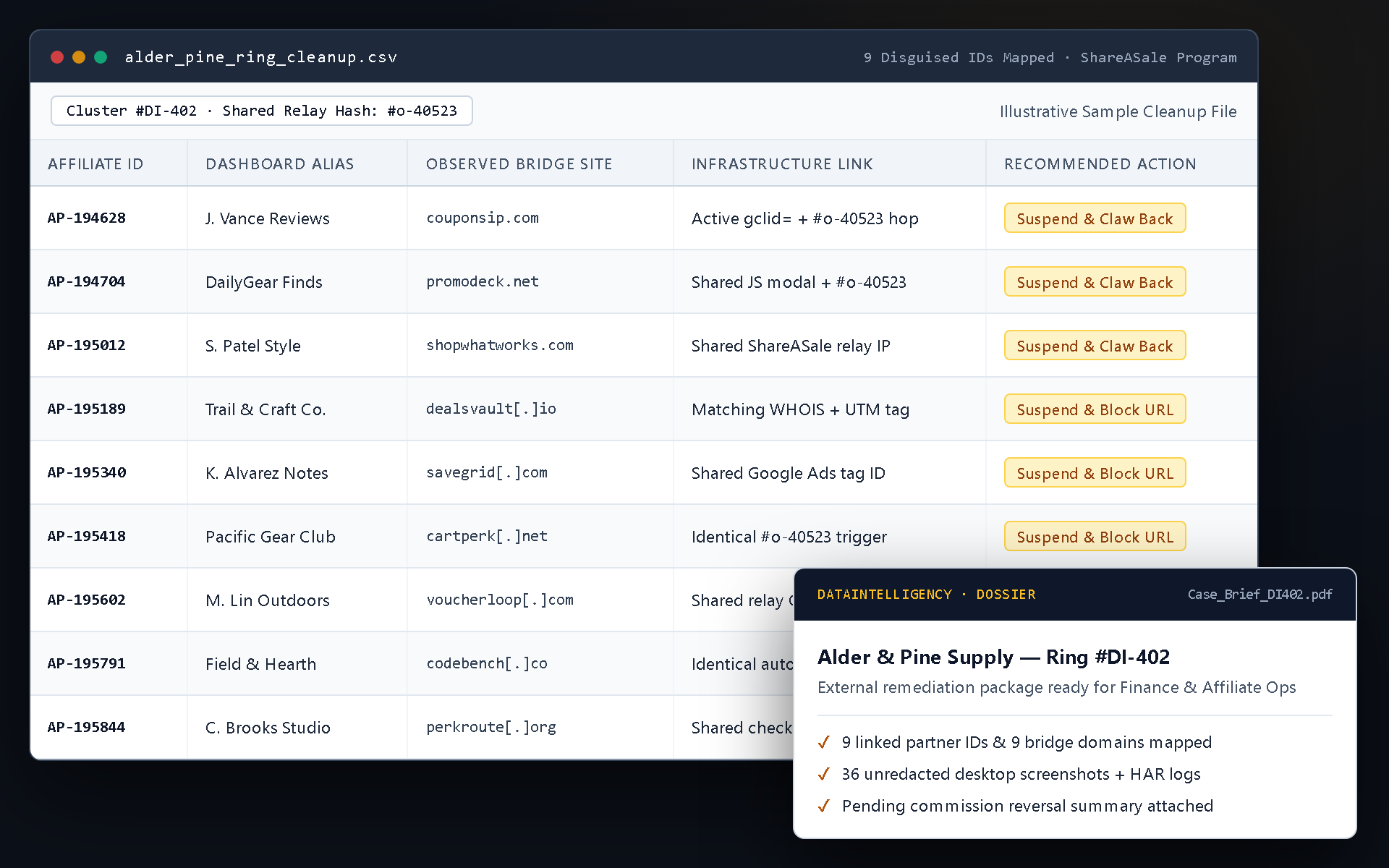
Every disguised partner ID, dashboard creator alias, external bridge domain, and shared infrastructure signal formatted for immediate bulk deactivation.

02 · Timestamped Visual Chain

Unredacted Browser Captures & HAR Logs

Clean desktop screenshots and redirect chains proving each listed ID intercepted branded checkout traffic on your domain.

03 · Dispute & Clawback Log

Commission Reversal Documentation

Network parameter logs (utm_campaign, sscid, irclickid, click timestamps) organized for Impact, ShareASale, Awin, or Refersion reversals.

Sample cleanup file workbook (alder_pine_ring_cleanup.csv) listing 9 linked affiliate IDs paired with an executive Case Brief PDF summary.

Request an external program check

Share your storefront domain and affiliate network with briefings@dataintelligency.com. Our research desk inspects public promo-code SERPs and redirect paths for disguised coupon rings—zero dashboard logins or tracking pixels required.

Request a Program Audit

Common questions from brand operators

Do you need access to our Impact, ShareASale, or Shopify account?

No. Everything in our cleanup file is captured externally using browser telemetry, DNS/infrastructure clustering, and live redirect verification. You never share API keys, logins, or customer data.

Why didn't our affiliate manager or platform fraud filters catch this?

Platform filters look for extreme spikes on a single publisher ID. Disguised rings split checkout traffic across 5 to 15 separate accounts disguised as creators or editorial blogs so each account stays below alert thresholds.

Is this a recurring SaaS subscription or monthly retainer?

No. We price each mapped cleanup file as a flat one-off fee with zero ongoing commitment. You receive the full evidence dossier, deactivate the linked IDs in your dashboard, and keep 100% of the recovered margin.

How do we validate findings before purchasing a cleanup file?

Every audit opens with two concrete sample affiliate IDs and active bridge domains observed against your storefront. Your team verifies those initial IDs inside your own affiliate ledger before ordering the full fixed-fee map.